China Wok Nutrition & Allergen Information
China Wok Nutrition & Allergen Information
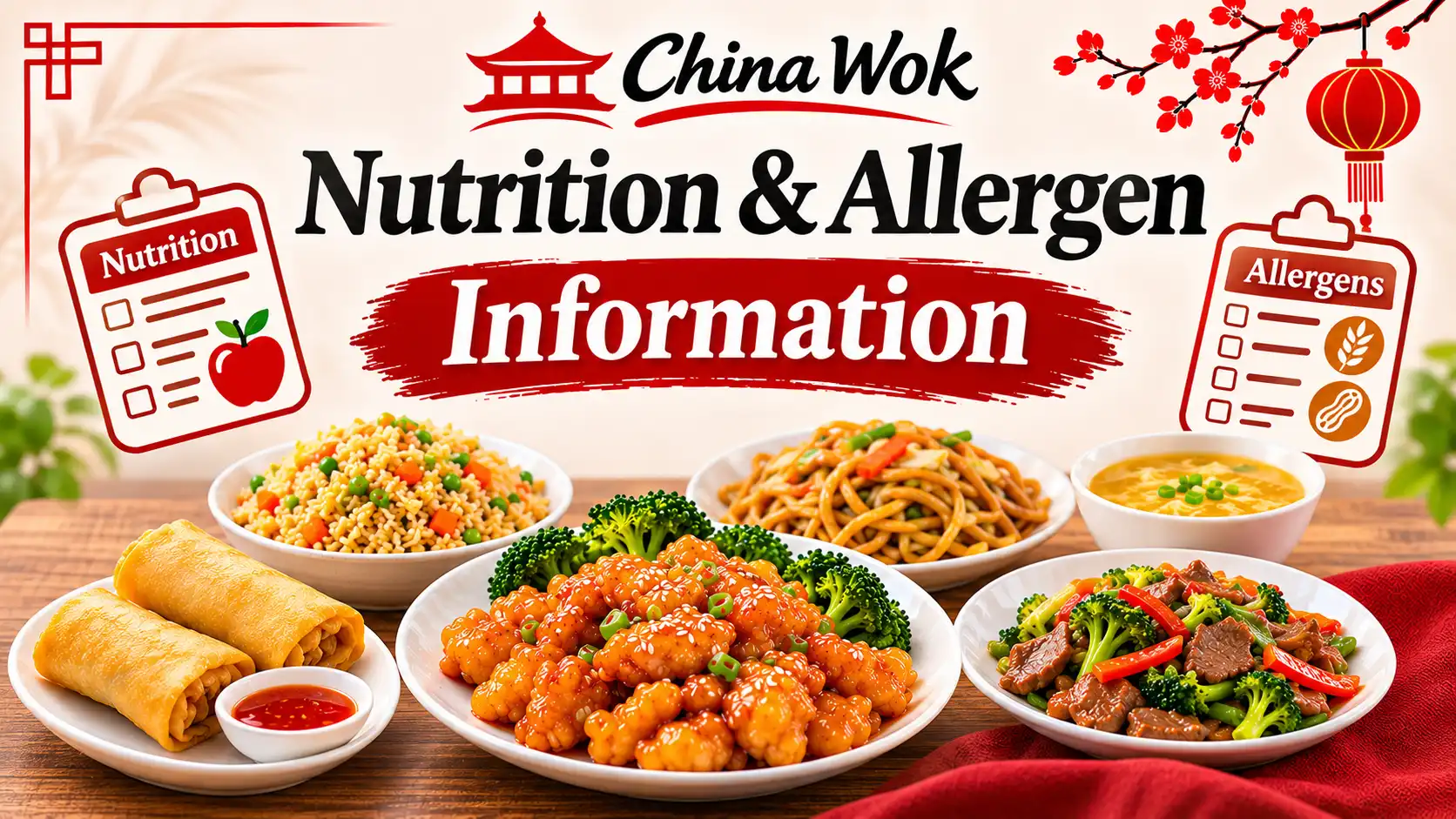
Understanding ingredients, nutrition and food allergens can help you make informed choices when ordering Chinese-American food. Explore this guide to learn about calories, common allergens, dietary preferences and food preparation practices associated with China Wok menu items.
China Wok restaurants may use different ingredients, recipes and preparation methods. Nutrition values and allergen information can therefore vary between individual locations. Always contact your selected restaurant for current, dish-specific information.
If you have a food allergy or serious dietary restriction, do not rely on menu descriptions alone. Ask the restaurant about ingredients, preparation methods and possible cross-contact before placing an order.
Explore This Nutrition & Allergen Guide
Use the sections below to find information about nutrition, ingredients, common allergens and dietary considerations.
Understanding China Wok Nutrition Information
Nutrition information helps customers understand what goes into their meals. However, exact nutritional values for China Wok dishes may differ between restaurants because ingredients, recipes, serving sizes and cooking methods are not always the same.
Why Nutrition Information Can Vary
Two restaurants may prepare a dish with the same menu name but use different ingredients or quantities. These differences can affect calories, protein, carbohydrates, fat and sodium.
Portion sizes and preparation methods also matter. A fried dish may have different nutritional content from a steamed version. Sauces, cooking oils and additional toppings can further change the final nutritional profile.
Factors That Can Affect Nutrition
Ingredients
Different vegetables, meats, oils and sauces can change the nutritional composition of a dish.
Serving Size
Larger portions generally contain more food and may provide more calories and nutrients.
Cooking Method
Steaming, stir-frying, deep-frying and other methods can affect the amount of fat and calories.
Sauces and Seasonings
Added sauces and seasonings may contribute additional calories, sodium, sugar or other ingredients.
Ask your selected China Wok restaurant whether it provides an official nutrition guide, ingredient information or dish-specific nutritional details. Online menu descriptions alone cannot confirm exact calorie or nutrient values.
Calories in China Wok Menu Items
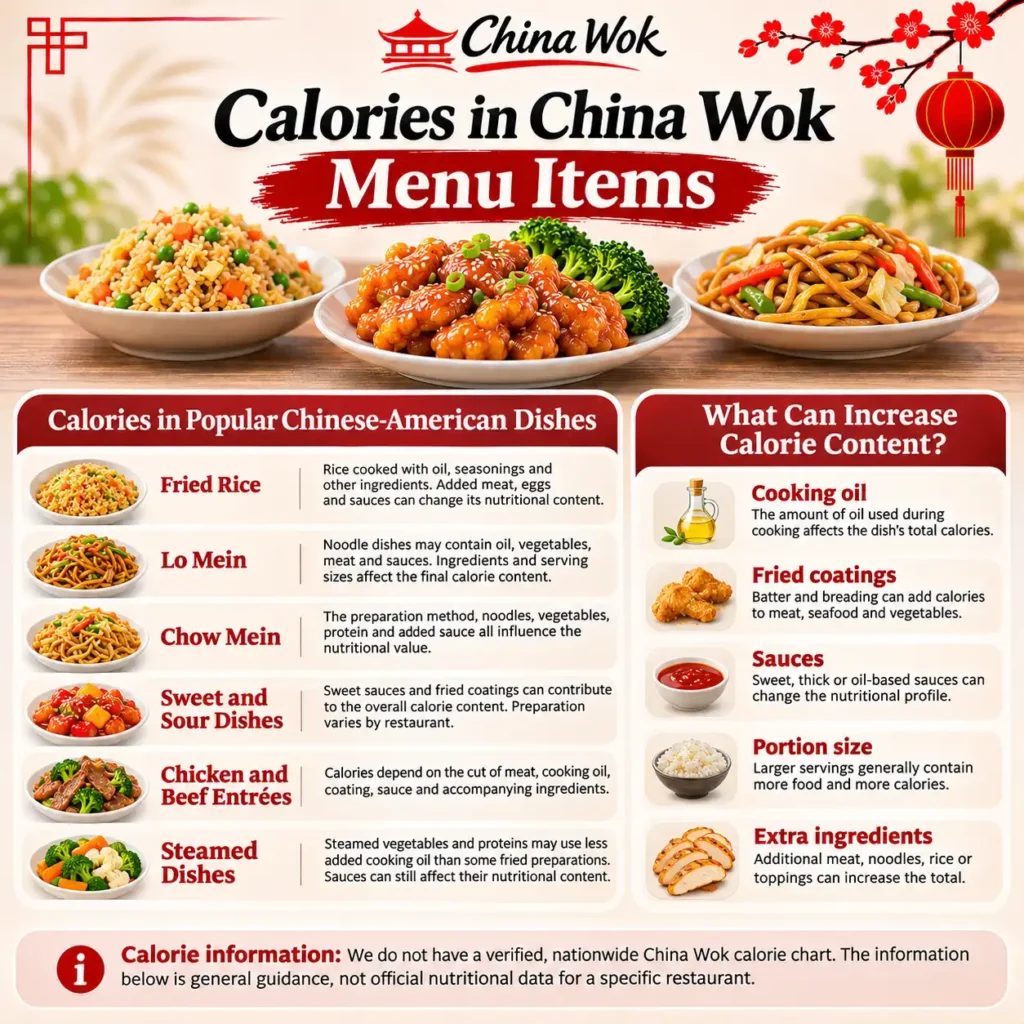
Calories in China Wok menu items depend on the ingredients, portion size, cooking method and sauces used. A dish may also have different calorie values at different restaurant locations. This guide explains what can affect the calorie content of popular Chinese-American dishes.
Calories in Popular Chinese-American Dishes
Menu descriptions can help you understand how a dish is prepared. However, they cannot provide an exact calorie count. Ask your local restaurant for nutrition information when available.
Fried Rice
Rice cooked with oil, seasonings and other ingredients. Added meat, eggs and sauces can change its nutritional content.
Lo Mein
Noodle dishes may contain oil, vegetables, meat and sauces. Ingredients and serving sizes affect the final calorie content.
Chow Mein
The preparation method, noodles, vegetables, protein and added sauce all influence the nutritional value.
Sweet and Sour Dishes
Sweet sauces and fried coatings can contribute to the overall calorie content. Preparation varies by restaurant.
Chicken and Beef Entrées
Calories depend on the cut of meat, cooking oil, coating, sauce and accompanying ingredients.
Steamed Dishes
Steamed vegetables and proteins may use less added cooking oil than some fried preparations. Sauces can still affect their nutritional content.
What Can Increase Calorie Content?
- Cooking oil: The amount of oil used during cooking affects the dish’s total calories.
- Fried coatings: Batter and breading can add calories to meat, seafood and vegetables.
- Sauces: Sweet, thick or oil-based sauces can change the nutritional profile.
- Portion size: Larger servings generally contain more food and more calories.
- Extra ingredients: Additional meat, noodles, rice or toppings can increase the total.
How to Get Accurate Calorie Information
Contact the China Wok location preparing your meal. Ask whether it has an official nutrition guide or dish-specific calorie information. If exact figures are unavailable, ask about ingredients, preparation methods and serving sizes.
Do not rely on calorie estimates from another branch as an exact match. Recipes, portions and preparation methods may differ.
Common Nutritional Components in China Wok Food
China Wok menu items can contain different combinations of carbohydrates, protein, fats, vegetables and sodium. Their nutritional content depends on the recipe, ingredients and preparation method used by each restaurant. Understanding these components can help you make more informed menu choices.
Carbohydrates
Rice, noodles, flour-based coatings and some sauces provide carbohydrates. Fried rice, lo mein, chow mein and rice-based meals are common examples.
Protein
Chicken, beef, pork, shrimp, fish, eggs and tofu can contribute protein. The amount depends on the portion and ingredients in each dish.
Dietary Fats
Cooking oils, fried coatings and certain sauces contribute dietary fats. Preparation methods can make the fat content vary between similar dishes.
Vegetables and Fibre
Broccoli, cabbage, carrots, mushrooms and other vegetables can provide dietary fibre and various nutrients. The amount depends on the recipe and serving size.
Sodium
Soy sauce, seasonings, marinades and prepared sauces can contribute sodium. Ask the restaurant whether it can accommodate a lower-sodium preparation.
Sugars
Sweet and sour sauce, glazes and other sweetened sauces may contain added sugars. The amount varies with the restaurant’s recipe.
How These Components Appear on the Menu
Different menu categories combine these components in different ways. Rice and noodle dishes usually contain carbohydrate-rich ingredients. Meat, seafood and tofu dishes can provide protein. Vegetable dishes may include fibre-rich ingredients, while sauces and cooking oils can affect fat, sodium and sugar content.
Questions to Ask Your Local Restaurant
- What ingredients are used in the dish?
- Can the restaurant provide portion or nutrition information?
- Can sauces be served separately?
- Can the dish be prepared with less added salt or oil?
- Are there ingredient substitutions available?
Common Food Allergens in China Wok Menu Items
Some China Wok menu items may contain ingredients that trigger food allergies. Common examples include soy, wheat, eggs, peanuts, tree nuts, fish and shellfish. Ingredients and preparation methods can vary between restaurant locations. Always confirm allergen information directly with the branch preparing your meal.
Soy
Soy sauce, tofu and certain prepared sauces may contain soy ingredients. Ask about sauces, marinades and cooking ingredients.
Wheat
Wheat may appear in noodles, breading, batter, soy sauce and other prepared ingredients. Confirm the ingredients of each component.
Eggs
Eggs may be used in egg foo young, fried rice, noodle dishes, batters and some sauces. Recipes differ by location.
Peanuts
Some dishes may include peanuts as an ingredient or topping. Ask whether peanuts are used in the recipe or nearby preparation areas.
Tree Nuts
Certain dishes may use nuts or nut-based ingredients. Confirm the exact ingredients and possible cross-contact risks.
Fish and Shellfish
Seafood dishes may contain fish, shrimp or other shellfish. Some sauces and shared cooking equipment may also create allergen concerns.
Milk
Some prepared ingredients or specialty recipes may contain milk. Ask the restaurant to check sauces, toppings and packaged products.
Sesame
Sesame seeds and sesame oil may appear in certain dishes or sauces. Ask about both visible toppings and cooking ingredients.
Why Allergen Information Can Differ
Individual China Wok restaurants may use different suppliers, recipes and preparation methods. A sauce or packaged ingredient may also contain an allergen that is not obvious from the menu description.
Shared fryers, utensils, cookware and preparation surfaces can create cross-contact risks. Asking for an ingredient change does not automatically make a dish safe for someone with an allergy.
What to Tell the Restaurant
- Name the exact food allergen.
- Explain whether even small amounts could cause a reaction.
- Ask about sauces, marinades, toppings and packaged ingredients.
- Ask whether shared equipment or preparation surfaces create cross-contact risks.
- Do not order if the restaurant cannot confidently address your allergy concerns.
If you have a serious food allergy, rely on direct confirmation from the restaurant rather than assumptions based on dish names or ingredient substitutions.
Allergens in Chinese-American Food
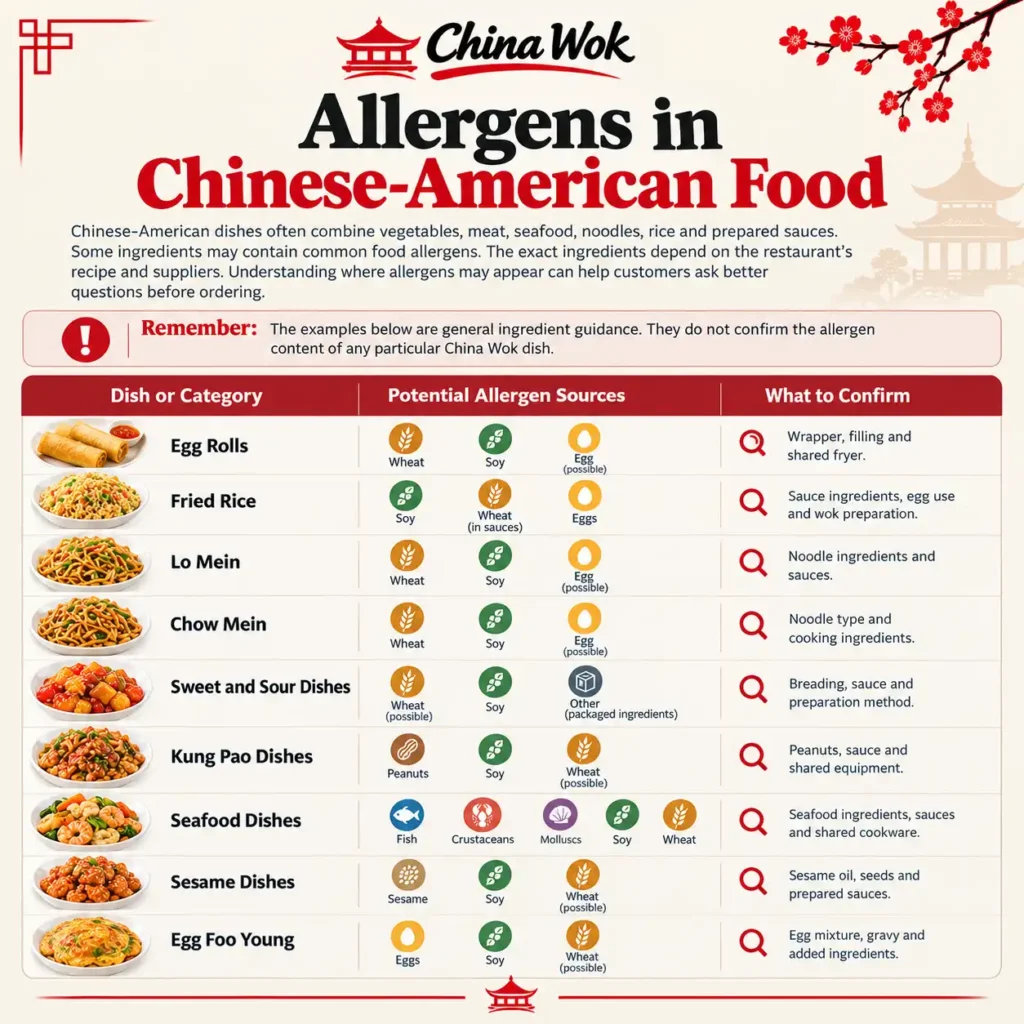
Chinese-American dishes often combine vegetables, meat, seafood, noodles, rice and prepared sauces. Some ingredients may contain common food allergens. The exact ingredients depend on the restaurant’s recipe and suppliers. Understanding where allergens may appear can help customers ask better questions before ordering.
Common Dishes and Potential Allergen Sources
| Dish or Category | Potential Allergen Sources | What to Confirm |
|---|---|---|
| Egg Rolls | Wheat, soy and possible egg ingredients | Wrapper, filling and shared fryer |
| Fried Rice | Soy, wheat-containing sauces and eggs | Sauce ingredients, egg use and wok preparation |
| Lo Mein | Wheat, soy and possible egg | Noodle ingredients and sauces |
| Chow Mein | Wheat, soy and possible egg | Noodle type and cooking ingredients |
| Sweet and Sour Dishes | Possible wheat, soy and other packaged ingredients | Breading, sauce and preparation method |
| Kung Pao Dishes | Peanuts, soy and possible wheat | Peanuts, sauce and shared equipment |
| Seafood Dishes | Fish, crustaceans, molluscs, soy and wheat | Seafood ingredients, sauces and shared cookware |
| Sesame Dishes | Sesame, soy and possible wheat | Sesame oil, seeds and prepared sauces |
| Egg Foo Young | Eggs, soy and possible wheat in gravy | Egg mixture, gravy and added ingredients |
Why Sauces Need Special Attention
Sauces can contain several ingredients that are not obvious from a dish name. Soy sauce may contain wheat, while other prepared sauces may include soy, sesame, seafood-based ingredients or added seasonings.
Ask the restaurant to check the exact sauce label or recipe. Do not assume that a sauce is safe because its main ingredients appear suitable.
Fried Food and Shared Cooking Equipment
Fried dishes may share cooking oil, fryers, utensils or preparation surfaces. Even when a recipe does not list a particular allergen, shared equipment can create cross-contact.
Customers with serious allergies should ask whether the restaurant can safely prepare the meal separately. If staff cannot confirm suitable preparation, choosing another meal or restaurant may be safer.
Gluten-Free and Wheat-Free Options at China Wok
Customers avoiding gluten or wheat should check ingredients carefully before ordering from China Wok. Many Chinese-American dishes use noodles, breading, sauces and seasonings that may contain wheat or gluten. Available alternatives depend on the restaurant’s ingredients and preparation facilities.
Understanding Gluten and Wheat
Gluten is a group of proteins found in wheat, barley and rye. Wheat is one source of gluten, but it is not the only source. People with celiac disease or gluten sensitivity may need to avoid all gluten-containing ingredients.
A wheat-free product may still contain barley or rye. Always check the complete ingredient information instead of relying only on a wheat-free description.
Menu Ingredients That Need Checking
Noodles
Lo mein, chow mein and other noodle dishes may use wheat-based noodles. Ask about the exact noodle ingredients.
Soy Sauce
Many traditional soy sauces contain wheat. Ask whether the restaurant uses a verified gluten-free alternative.
Fried Foods
Egg rolls, battered chicken and other fried items may contain wheat in their wrappers or coatings.
Sauces and Gravies
Some sauces and gravies use wheat-based thickeners or prepared ingredients. Confirm their recipes.
Seasonings
Seasoning blends and packaged ingredients may contain gluten or wheat derivatives. Ask staff to check product labels.
Shared Equipment
Woks, fryers, utensils and preparation surfaces may come into contact with gluten-containing ingredients.
Questions to Ask Before Ordering
- Do the dish’s ingredients contain wheat, barley or rye?
- Does the soy sauce contain wheat?
- Are the noodles or coatings made with wheat flour?
- Can the restaurant check the labels of packaged sauces and seasonings?
- Can staff prepare the meal using separate, clean equipment?
- Is there a risk of cross-contact in the kitchen or fryer?
Confirm Availability with Your Local Branch
China Wok restaurants may use different recipes, sauces and suppliers. A gluten-free alternative available at one branch may not be available at another. Contact the specific location before visiting or placing an order.
Vegetarian and Dietary Preferences at China Wok
China Wok menus may include vegetable dishes, tofu, rice, noodles and other options for customers with different dietary preferences. However, ingredients and cooking methods vary between locations. Customers should confirm how each dish is prepared before ordering.
Vegetarian Menu Considerations
Vegetable Fried Rice
Ask whether the rice contains eggs, meat-based seasonings or animal-derived ingredients. Also confirm the cooking oil and preparation method.
Vegetable Lo Mein
Check the noodle ingredients and sauces. Ask whether the dish uses oyster sauce, meat-based broth or other animal-derived ingredients.
Mixed Vegetables
Vegetable combinations may suit some vegetarian preferences. Confirm the sauce, seasoning and cooking liquid used.
Tofu Dishes
Tofu is plant-based, but its sauce and preparation may include animal-derived ingredients. Ask about the complete recipe.
Steamed Vegetables
Ask whether vegetables are steamed separately and served without meat-based sauces, butter or other ingredients that conflict with your diet.
Vegetable Egg Foo Young
This dish contains eggs by its usual preparation. It may suit some vegetarian diets but is not suitable for a vegan diet.
Vegetarian, Vegan and Other Dietary Needs
Vegetarian and vegan diets have different ingredient requirements. Some vegetarians eat eggs, while vegans avoid all animal-derived ingredients. Customers should explain their dietary preference clearly.
Other dietary needs may involve avoiding certain allergens, limiting sodium or choosing meals without specific ingredients. A restaurant may not be able to accommodate every requirement.
Ingredients Worth Confirming
- Oyster sauce: Commonly made with oyster ingredients and unsuitable for many vegetarian diets.
- Fish sauce: May appear in certain sauces or seasonings.
- Meat-based broth: Chicken, beef or other broths may be used in soups and sauces.
- Eggs: May appear in fried rice, noodles and egg-based dishes.
- Dairy ingredients: Check packaged sauces and specialty ingredients when avoiding milk.
- Shared equipment: Woks, fryers and utensils may be used for both vegetarian and meat dishes.
Check Dietary Options at Your Local Branch
Menu availability and ingredients can differ between China Wok restaurants. Contact your chosen branch to confirm whether it can prepare a meal that meets your dietary preferences.
Cross-Contact and Food Preparation at China Wok
Cross-contact happens when an allergen unintentionally transfers to food that does not normally contain it. This can happen through shared utensils, cookware, preparation surfaces, cooking oil or other kitchen equipment. Customers with food allergies should understand these risks before ordering from a China Wok restaurant.
Common Sources of Cross-Contact
Shared Woks and Pans
Kitchen staff may use the same wok or pan for different dishes. Food residue from previous orders may transfer between meals.
Shared Fryers
Different fried foods may use the same cooking oil. Allergen-containing coatings or ingredients can transfer through shared frying equipment.
Cooking Utensils
Spatulas, ladles, tongs and other utensils may be used for multiple ingredients or dishes without adequate cleaning.
Preparation Surfaces
Cutting boards, counters and preparation areas may come into contact with allergens during food preparation.
Sauces and Containers
Shared sauce containers, serving spoons and ingredient storage areas may allow allergens to transfer between foods.
Food Handling
Hands, gloves and shared handling equipment may transfer allergen traces between ingredients and prepared meals.
Why Shared Fryers Matter
Fried foods may share oil and cooking equipment. For example, an item without a particular allergen may be prepared in a fryer that previously cooked food containing that allergen.
Ask whether the restaurant uses separate fryers and whether it can prevent cross-contact. A separate order does not automatically mean separate cooking equipment.
Questions About Kitchen Preparation
- Can staff prepare the meal using clean, separate utensils?
- Are separate woks, pans or cooking surfaces available?
- Does the restaurant use shared frying oil?
- Can ingredients be handled separately during preparation?
- Are sauces and toppings stored in shared containers?
- Can the kitchen safely accommodate the specific allergy?
Gluten Cross-Contact
Customers with celiac disease should also ask about shared noodle water, fryers, utensils, preparation surfaces and cooking equipment. Even when a recipe uses suitable ingredients, shared kitchen equipment may introduce gluten.
Confirm Preparation Details Before Ordering
Every China Wok location may have different kitchen procedures and equipment. Contact the specific branch, explain your allergy or dietary requirement, and ask whether it can prepare your meal safely. If the restaurant cannot provide clear answers, avoid relying on ingredient substitutions alone.
How to Confirm Allergen Information at China Wok
Checking allergen information before ordering can help customers make more informed food choices. China Wok restaurants may use different ingredients, suppliers and preparation methods. Contact the exact branch preparing your meal rather than relying on information from another location.
Step 1: Identify Your Specific Allergy
Tell the restaurant exactly which ingredient causes your allergy. Examples include peanuts, tree nuts, shellfish, fish, soy, wheat, eggs, milk and sesame. Explain whether you must avoid even small traces of the allergen.
Step 2: Ask About Every Ingredient
Ask staff to check the complete recipe. Include sauces, marinades, seasonings, toppings, coatings and packaged ingredients. Some allergens may not appear in a dish’s name or short menu description.
Step 3: Discuss Kitchen Preparation
Ask whether the restaurant can use clean utensils, separate cookware and suitable preparation surfaces. Also check shared fryers, cooking oil, woks and food storage areas.
Step 4: Request a Clear Answer
Ask staff whether they can confidently confirm the ingredients and preparation process. If they cannot verify the information, do not assume the dish is safe.
Allergen Confirmation Checklist
- Identify the exact allergen.
- Check the full ingredient list.
- Ask about sauces and seasonings.
- Confirm whether packaged ingredients contain allergens.
- Discuss shared cooking equipment and cross-contact.
- Confirm whether separate preparation is possible.
- Ask staff to explain any remaining uncertainty.
Questions to Ask When Calling
“Hello, I am interested in ordering a meal, but I have a food allergy to [allergen]. Could someone confirm whether the dish contains this ingredient? I would also like to know about sauces, seasonings and shared cooking equipment. Can your kitchen safely prepare this meal without cross-contact?”
Check Before Ordering Online
Online menus may not show complete ingredient or allergen details. Do not rely only on menu labels or order notes. Contact the restaurant directly before submitting an order if you have an allergy.
Why Branch Confirmation Matters
China Wok locations may operate with different suppliers, recipes and kitchen procedures. An ingredient or preparation method confirmed at one branch may not apply to another. Always verify details with the location handling your order.
Important Nutrition & Allergen Disclaimer
The nutrition and allergen information on ChinaWokMenu.us is provided for general informational purposes. It helps visitors understand common ingredients, nutritional components and potential food allergens. It should not replace official information from the restaurant preparing your meal.
Nutrition Information May Vary
Nutritional content can differ between restaurant locations and individual menu items. Portion sizes, ingredients, cooking oils, sauces and preparation methods may affect calories, fats, carbohydrates, protein, sodium and sugars.
We do not guarantee that general nutrition descriptions or information from one location apply to every China Wok restaurant.
Allergen Information Is Not Guaranteed
Ingredient lists and menu descriptions may not identify every possible allergen. Recipes, packaged ingredients and preparation practices can change. Customers should confirm current allergen information directly with the restaurant before ordering.
Cross-contact may occur through shared fryers, woks, utensils, cookware and preparation surfaces. We cannot guarantee that any menu item is free from a particular allergen.
No Medical or Dietary Advice
The content on this page is not medical advice. It does not diagnose, treat or prevent food allergies, celiac disease or other medical conditions. Consult a qualified healthcare professional about individual dietary and medical requirements.
Restaurant Confirmation Is Essential
Contact the specific China Wok location handling your order to confirm ingredients, nutrition details and food preparation practices. If staff cannot verify whether a meal meets your requirements, do not rely on assumptions or general menu descriptions.
Changes and Accuracy
Restaurant menus, ingredients and recipes may change without notice. We aim to present useful information, but we cannot promise that every detail remains current or complete. Please report incorrect information so it can be reviewed.
China Wok Nutrition & Allergen FAQs
Find answers to common questions about China Wok calories, ingredients, food allergens and dietary preferences. Information can vary between restaurant locations, so confirm important details with your local branch.
Does China Wok provide nutrition information?
Nutrition information may differ between China Wok locations. Some restaurants may provide ingredient or nutrition details directly, while others may not publish a complete nutrition guide. Contact your local restaurant for available information.
How many calories are in China Wok menu items?
Calories depend on the dish, serving size, ingredients and preparation method. Sauces, cooking oil and portion sizes can also affect the final calorie content. Ask your local restaurant whether it can provide an estimate for a specific dish.
Does China Wok publish an allergen menu?
A complete allergen menu is not confirmed for every China Wok location. Ask the restaurant directly about the ingredients and potential allergens in the dish you want to order.
What common allergens may be found in Chinese-American dishes?
Depending on the recipe, dishes may contain soy, wheat, eggs, sesame, peanuts, tree nuts, fish or shellfish. Ingredients vary by restaurant and recipe. Always confirm the specific allergens with the branch preparing your meal.
Does China Wok have gluten-free options?
Gluten-free availability has not been confirmed across all locations. Some sauces, noodles, coatings and seasonings may contain wheat or gluten. Ask your restaurant about ingredients and preparation before ordering.
Are vegetarian dishes available at China Wok?
Some locations list vegetable-based dishes, tofu dishes or other meat-free choices. However, ingredients and preparation methods can vary. Confirm whether sauces, broths and cooking surfaces meet your dietary requirements.
Can China Wok prepare food without a specific allergen?
This depends on the restaurant’s ingredients, equipment and preparation procedures. Ask the staff whether they can accommodate your request and explain any cross-contact risks. Do not assume a dish is allergen-free without confirmation.
Can I request ingredient information before ordering?
Yes. Contact the restaurant before placing your order and ask about the ingredients in your chosen dish. Mention any food allergies or dietary restrictions clearly.
Does the same China Wok dish have identical nutrition at every location?
Not necessarily. Recipes, portion sizes, ingredients and cooking methods may differ between independently operated locations. Nutrition details from one branch should not be treated as universal information for every restaurant.
Where can I confirm China Wok allergen information?
Contact the specific China Wok restaurant where you plan to order. Ask about the current recipe, ingredient list, sauces and food preparation procedures. This is especially important when you have a food allergy or a medically required diet.
Important: ChinaWokMenu.us is an independent informational directory. It is not the official China Wok website. Always confirm current nutrition and allergen information with the restaurant preparing your food.